
Contents of this guide
What is recycled in Panama and who regulates it
MiAmbiente’s official campaigns collect plastics, paper, cardboard, Tetra Pak cartons, glass, aluminum cans, used cooking oil and electronics. In the capital, the Autoridad de Aseo Urbano y Domiciliario (AAUD) handles urban solid waste, including the Cerro Patacón landfill, and municipalities hold that responsibility elsewhere. Hazardous waste falls under the Ministry of Health (MINSA), according to a MiAmbiente note from May 2020.
The volume of waste explains the interest. In a World Recycling Day note from 2025, MiAmbiente put generation at about 4,800 tons a day and more than 1.7 million tons a year, including roughly 380,000 tons of plastic annually, and estimated that less than 10 percent is recycled.
Table by material
The table gathers what MiAmbiente has published for each material. Sources checked on November 18, 2026. Drop-off points named in earlier notes belonged to one-off drives and are not a current list.
| Material | What the official source says | Source |
|---|---|---|
| Plastic | Containers with resin codes 1, 2, 4, 5 and 6. National drives also took PET 1 and 2 bottles at specific points. | MiAmbiente, April 2021 and May 2021 |
| Paper and cardboard | White or colored bond paper, newspaper without staples, cardboard, and paper without clips or tape. The 2020 note excludes magazine-type and laminated paper; the 2021 note includes it in that drive. | MiAmbiente, May 2020 and April 2021 |
| Glass | Glass containers, clean and dry, among the materials of the 2021 national drive. | MiAmbiente, April 2021 |
| Metals | Aluminum cans from food and drinks. Scrap and metal materials require proper disposal. | MiAmbiente, May 2020 |
| Tetra Pak | Multilayer cartons, among the materials accepted in the drives. | MiAmbiente, 2020 and 2021 |
| Electronics | Included at the 20 points of the 2021 national drive. A 2023 decree created an interagency commission on electrical and electronic waste. | MiAmbiente, 2021 and Executive Decree 23 of 2023 |
| Used cooking oil | Must be handed to companies that dispose of it properly. | MiAmbiente, May 2020 |
| Batteries | Require proper disposal. At the time of writing there is no official list of drop-off points. | MiAmbiente, May 2020 |
| Textiles and clothing | At the time of writing no official textile recycling rule or program has been published. | No official source |
Materials must be delivered clean and dry. Points depend on each campaign and municipality, so current information must be checked with MiAmbiente and the AAUD.
Current legal framework on waste and recycling
These are the rules that could be opened and confirmed:
- Law 33 of May 30, 2018. Sets the Basura Cero (Zero Waste) policy and its framework for integrated waste management, according to its title in Gaceta Oficial 28537-C. The articles could not be read in an accessible format, so its obligations are not detailed here.
- Law 1 of 2018. Adopts measures to promote reusable bags in commercial establishments (Gaceta Oficial 28448-B). It bans polyethylene bags in supermarkets, pharmacies and retailers, after a transition period that ended in 2019. It is enforced by the consumer protection authority, Acodeco, according to La Estrella de Panamá, June 2026.
- Executive Decree 23 of May 4, 2023. Creates the Interagency Commission on Electrical and Electronic Equipment Waste in Panama, under the Ministry of Health (Gaceta Oficial 29774-B).
- Law 502 of 2025. Sets rules for implementing the circular economy. It promotes reuse, recycling and repair, establishes Extended Producer Responsibility and creates the National Circular Economy Council under MiAmbiente (Gaceta Oficial 30413, November 26, 2025). It is covered in the article on the circular economy in Panama: law and opportunities for businesses.
- MiAmbiente Resolution DM-0496-2025. Bans single-use plastics and polystyrene inside protected areas from January 1, 2026, according to the EFE news agency.
MiAmbiente also cites Law 59 of October 20, 2009, which declares a National Recycling Day and promotes recycling and environmental education, in its April 2021 note. As for a specific regime for electronic waste, at the time of writing no law could be confirmed as published.
What companies are asked to do
The verified obligations are few and vary in scope:
- Shops may not hand out polyethylene bags, and Acodeco sanctions, among other faults, missing certifications and unauthorized charges (Law 1 of 2018, according to La Estrella).
- Single-use plastics have been banned in protected areas since January 1, 2026.
- Law 502 establishes Extended Producer Responsibility as a way to mitigate product impacts through to final disposal (article 2), provides for technical guides for producers and importers (article 10), and requires public and private entities to supply data to the Circular Economy Indicators Platform under the regulation (article 11). Article 13 tasks MiAmbiente with regulating the law, and at the time of writing that regulation had not been published.
Those starting a company can review the general procedures in how to open a company in Panama, and the weight of each sector in how Panama’s economy works.
How to recycle, step by step, at home or in the office
The practices below come from MiAmbiente’s recommendations.
- Apply the 3R rule: reduce, reuse and recycle, in that order.
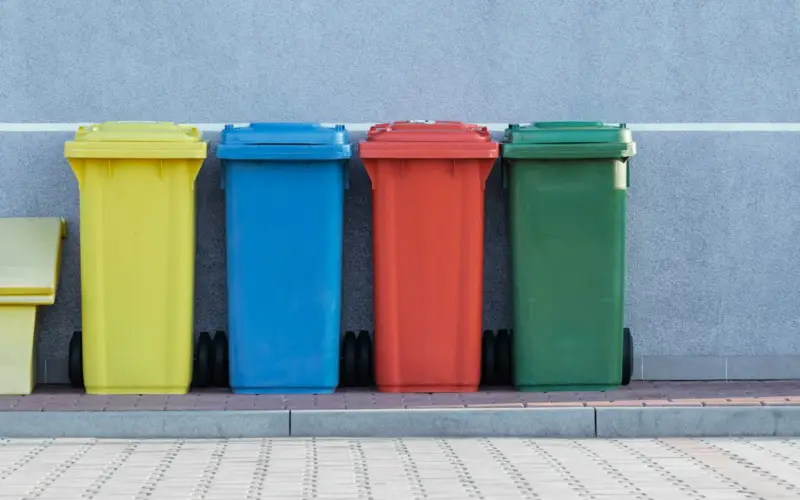
- Sort by material: plastics, paper and cardboard, glass, aluminum cans and Tetra Pak.
- Empty and clean containers and let them dry before storing them.
- Remove staples, clips and tape from paper and cardboard.
- Check plastic resin codes (1, 2, 4, 5 and 6 in the 2021 drives).
- Confirm the current drop-off point with MiAmbiente, the AAUD or the municipality before taking materials.
- Hand over separately used cooking oil, electronics, batteries and scrap metal to whoever can dispose of them properly.
What should not be mixed
- Recyclables with wet or dirty waste. MiAmbiente requires clean, dry materials.
- Paper with staples, clips or tape. The 2021 note asks for paper without them.
- Laminated paper with regular paper. The 2020 note excludes it.
- Used oil, electronics, batteries and scrap with household trash. They require proper disposal, and hazardous waste falls under MINSA.
Frequently asked questions
Where can people recycle in Panama?
At the drop-off points that MiAmbiente, the cleaning authority and municipalities set up for each campaign. At the time of writing there is no single permanent official list, so the current location is confirmed with those bodies.
What can be recycled in Panama?
Plastics, paper, cardboard, Tetra Pak, glass, aluminum cans, used cooking oil and electronics, according to MiAmbiente’s 2020 and 2021 campaigns. Materials must be delivered clean and dry.
Where are electronics recycled in Panama?
MiAmbiente included them at the points of its 2021 national drive, and a 2023 decree created the interagency commission on electrical and electronic waste. At the time of writing there is no official list of permanent points.
Is recycling mandatory in Panama?
No general obligation for households to sort waste could be confirmed in the rules reviewed. Sector obligations do exist, such as the polyethylene bag ban in shops and the Extended Producer Responsibility in Law 502, which still awaits its regulation.
How much is recycled in Panama?
MiAmbiente estimates that less than 10 percent of the waste generated is recycled, out of about 4,800 tons of solid waste a day. The estimate appears in its 2025 World Recycling Day note.
Related articles
- Circular economy in Panama: law and opportunities for businesses
- How to open a company in Panama
- How Panama’s economy works
Sources
All sources were checked on November 18, 2026. Official sources are in Spanish.
- MiAmbiente, World Recycling Day note (2025).
- MiAmbiente, Recycling, a pending task that needs everyone (2020).
- MiAmbiente, Recicla por tu Futuro, Great Recycling Day (April 30, 2021) and collection points in Panamá province (May 12, 2021).
- Law 502 of 2025, Gaceta Oficial 30413.
- Law 33 of 2018, Gaceta Oficial 28537-C and Law 1 of 2018, Gaceta Oficial 28448-B.
- Executive Decree 23 of 2023, Gaceta Oficial 29774-B.
- La Estrella de Panamá, plastic bag law and EFE on Resolution DM-0496-2025.
Ask about this article
Type your question and we will show you the answer inside this article or in other Radar Panamá publications.