

Contents of this guide
How to get to El Valle de Antón from Panama City
El Valle de Antón is about 2.5 hours from Panama City, whether by private car or by bus, according to the Tourism Authority. Drivers take the Pan-American Highway to Las Uvas and follow the signposted detour. The Tourism Authority lists direct buses from the Albrook Grand Terminal.
The Panama Tourism Authority (Spanish guide) says the drive to Las Uvas on the Pan-American Highway takes about 2 hours, with about 45 more minutes from there. Buses leave from platform 48 of the Albrook Grand Transport Terminal every 30 minutes, per the same source.
| Mode | What the source says | Source |
|---|---|---|
| Car | About 2 hours to Las Uvas on the Pan-American Highway, then about 45 more minutes to the town | Tourism Authority |
| Bus | Direct from the Albrook Grand Terminal, platform 48, every 30 minutes | Tourism Authority |
| Reference total | About 2.5 hours from the city | Tourism Authority, itinerary |
The bus fare and the time of the last return do not appear in the official sources consulted, so they are confirmed at the terminal window before planning a one-day trip. For other outings near the city, Radar covers Taboga Island and nature parks near Panama City.
- Choose the mode: car along the Pan-American Highway to Las Uvas, or a direct bus from Albrook.
- Leave early, since the trip takes about 2.5 hours and trails are best started in the morning.
- Carry cash, because card acceptance in rural areas can be limited, according to the Tourism Authority.
- Confirm the return at the terminal or with the carrier before leaving town.
Trails and La India Dormida: what to hike in the crater
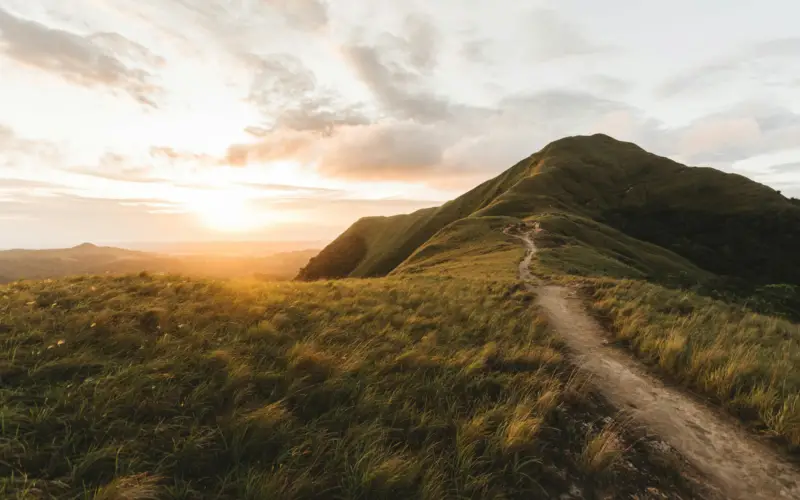
El Valle de Antón sits inside the crater of an inactive volcano, and four trails run along its rim: Cara Iguana, La India Dormida, La Silla and El Gaital. The Tourism Authority describes La India Dormida as the most iconic and well suited to people starting out.
Those four trails make up the Caldera Route, 30 kilometers in total, which can be done in full or in sections, per the official destination guide. On the way up to La India Dormida lies Piedra Pintada, a pre-Columbian petroglyph of unknown meaning, according to the Tourism Authority itinerary.
- La India Dormida: the best-known route. The official source publishes neither its duration nor an access fee.
- El Gaital: about 4 kilometers in total, with a steep climb to a viewpoint over the town, and a summit above 1,000 meters above sea level.
- Cerro Gaital: the Ministry of Environment explains that its slopes represent the walls of the old volcano’s crater, and it was created as a Natural Monument by Executive Decree 96 of 2001. More detail in the Ministry of Environment note.
- Chorro El Macho: a waterfall that can be explored and rappelled, plus a canopy tour with a 20-minute walk to the first of four platforms.
The Tourism Authority recommends suitable footwear and clothing, water and light food for long trails, and hiring authorized local guides for anyone without experience, because the weather changes and it is windy.
Hot springs, market, zoo and conservation centers
Besides the trails, El Valle offers thermal pools, a Sunday market of crafts and fruit, and the El Níspero zoo. The Tourism Authority also mentions the Amphibian Conservation Center, which works with endangered species such as the Panamanian golden frog.
- Hot springs: mineral-water pools on the slopes of Cerro Cara Iguana, where the natural mud can also be used as an exfoliant, per the official itinerary. The things-to-do page describes them as a rejuvenating bath. It gives no prices or hours.
- Market: the same page says it opens on Sundays, with crafts, fresh fruit and a presence of Ngäbe-Buglé and Guna culture. It gives no hours.
- El Níspero zoo: listed in the official guide as a place to learn about the golden frog. Hours and admission are checked directly with the zoo.
- Amphibian Conservation Center: focused on threatened amphibians, with the nearby Square Trees Trail, a family walk where birds, butterflies and sloths may be seen.
- More nature: the Tourism Authority cites a butterfly garden, an orchid garden, a serpentarium and more than 300 bird species.
- Chorro Las Mozas: a series of waterfalls on the Antón River, an easy walk, with natural pools.
The destination received the World Tourism Organization’s Best Tourism Villages recognition in 2024, according to the Tourism Authority guide.
What weather to expect in El Valle de Antón
El Valle de Antón has a mild, pleasant climate, cooler than Panama City. The Institute of Meteorology and Hydrology explains that air temperature drops with elevation, and the Tourism Authority warns that the weather changes quickly and that it is windy.
No town-specific average temperature turned up in official sources, so no figure is quoted here. For comparison, Radar gives the capital’s average in its dry season guide, with an annual mean of 27.3 °C at the Tocumen station. The IMHPA overview of Panama’s climate attributes the two seasons to the movement of the Intertropical Convergence Zone.
| Period | What the source says | Source |
|---|---|---|
| December to April | Dry season on the Pacific side | IMHPA, rainfall regime |
| May to November | Rainy season on the Pacific side, with September and October the wettest months | IMHPA, rainfall regime |
| July and August | A brief drop in rain within the rainy season (Veranillo) | IMHPA, rainfall regime |
When to go to El Valle de Antón
The most comfortable time for the trails is the dry season, December to April, per the IMHPA calendar for the Pacific side. The rainy season is also doable, with morning outings and a local guide, since the Tourism Authority says guides keep an eye on rainfall in those months.
The exact start of the dry season is not official and can come early or run long with El Niño, as Radar’s guide to the dry season in Panama explains. On long weekends, the November holidays and the Panama public holidays calendar help foresee when roads and trails will be busier.
The Tourism Authority’s routes page places the rainy season from March to November, while the IMHPA sets it from May to November on the Pacific side. This guide follows the IMHPA, the meteorological source.
Myths and facts
- Myth: a car is needed to get there. Fact: the Tourism Authority lists direct buses from Albrook, platform 48, every 30 minutes.
- Myth: it is a short hop. Fact: it takes about 2.5 hours from the city.
- Myth: La India Dormida is a hike for experts. Fact: the Tourism Authority describes it as well suited to beginners; El Gaital is the demanding one.
- Myth: cards are accepted everywhere. Fact: the official source recommends carrying cash in rural areas.
Radar’s guide to the dry season in Panama helps pick the month to climb the crater with less rain.
Frequently asked questions
How do you get to El Valle de Antón from Panama City?
By car along the Pan-American Highway to Las Uvas and the signposted detour, or by direct bus from the Albrook Grand Terminal, platform 48, with departures every 30 minutes according to the Tourism Authority.
How long does it take to get to El Valle de Antón?
About 2.5 hours from the city. By car, it is about 2 hours to Las Uvas and about 45 more minutes to the town.
What is there to do in El Valle de Antón?
Hike La India Dormida and the other Caldera Route trails, visit the hot springs, the Sunday market, the El Níspero zoo and the Amphibian Conservation Center.
What is the weather like in El Valle de Antón?
Mild and pleasant, cooler than the capital, with wind and quick changes. The dry season runs December to April and the rainy season May to November, per the IMHPA.
When is the best time to visit El Valle de Antón?
December to April, in the dry season, is more comfortable for hiking. In the rainy season, leaving early and using a local guide is advisable.
Related articles
- Taboga Island from Panama City: how to get there, ferry times and what to do
- Nature parks near Panama City: hours, entrance and trails
- Panama’s dry season: when it starts and the weather month by month
- November holidays in Panama: long weekends and what closes
- Panama public holidays
Sources
Checked on 5 November 2026. Several official sources are in Spanish.
- Panama Tourism Authority, El Valle de Antón (Spanish version): travel times, bus, Caldera Route.
- Panama Tourism Authority, El Valle de Anton (English version).
- Panama Tourism Authority, things to do in El Valle de Antón: trails, hot springs, market, zoo.
- Panama Tourism Authority, 4-day itinerary in El Valle de Antón.
- Panama Tourism Authority, trails and waterfalls of the Pacific Riviera.
- Executive Decree 96 of 2001, Cerro Gaital Natural Monument (Official Gazette 24343).
- Ministry of Environment, note on the Cerro Gaital Natural Monument (19 April 2021).
- IMHPA, general description of Panama’s climate.
- IMHPA, Panama’s rainfall regime.
Ask about this article
Type your question and we will show you the answer inside this article or in other Radar Panamá publications.