
Contents of this guide
What happened on January 9, 1964 in Panama
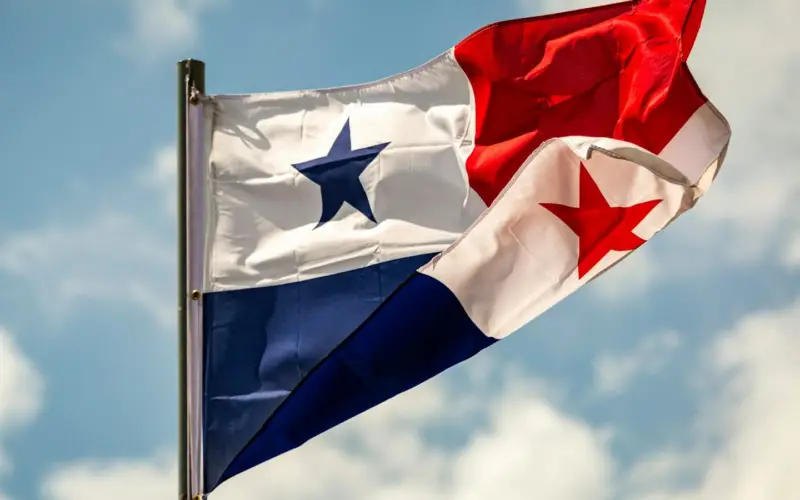
The United States had controlled the Canal Zone since 1903. An agreement between presidents Roberto F. Chiari and John F. Kennedy provided for the Panamanian flag to fly next to the US flag in the Zone, and the failure to honor it set off the protest, according to Telemetro and La Estrella de Panamá.
On January 9, 1964, a group of students led by pupils from the Instituto Nacional marched to Balboa High School, inside the Zone, to raise Panama’s flag. Zone residents opposed them, the students’ flag was torn and the protest turned into riots. The National Assembly’s compendium of laws on historic dates says the public then joined in the streets and that the first person killed was Ascanio Arosemena, a student at the Escuela Profesional Isabel Herrera de Obaldía.
Law 118 of 2013 itself refers to the patriotic events of January 1964, without limiting them to a single day.
How many people died: the figures by source
There is no single figure. The sources consulted give these:
- The National Assembly, in its compendium of laws on historic dates, cites a toll of 21 dead and more than 500 injured.
- Telemetro, explaining the day of mourning in January 2025, mentions about 22 dead and more than 550 injured.
- La Estrella de Panamá, in a historical review from April 2026, refers only to dozens of dead and hundreds of injured.
The sources consulted do not explain the gap between 21 and 22. Radar Panamá reports both figures with their sources and does not pick one.
January 9, 1964 in Panama: timeline
| Date | Event | Source |
|---|---|---|
| January 9, 1964 | Student march to Balboa High School to raise the flag; riots begin | Telemetro and National Assembly |
| January 10, 1964 | President Roberto F. Chiari breaks off diplomatic relations with the United States | US State Department |
| April 3, 1964 | Both countries sign a joint declaration to restore relations | US State Department |
| 1967 | Preliminary agreements on a new treaty, rejected by Panama | La Estrella de Panamá |
| September 7, 1977 | Torrijos-Carter Treaties signed | US State Department |
| December 31, 1999 | Canal handed over to Panama | US State Department |
| December 27, 2013 | Law 118 makes January 9 National Sovereignty Day | National Assembly |
Consequences: from the break to the Torrijos-Carter Treaties
The immediate consequence was diplomatic. The US State Department records that Chiari broke off relations on January 10, 1964, and that on April 3 of that year the two governments signed a joint declaration to restore them. According to La Estrella de Panamá, Panama made that step conditional on Washington agreeing to negotiate a new framework for the Canal.
Negotiations took more than a decade. The 1967 agreements failed because Panama considered them insufficient. On September 7, 1977, Omar Torrijos and Jimmy Carter signed the two treaties that bear their names; the US Senate ratified the Neutrality Treaty on March 16, 1978 and the Canal Treaty on April 18, according to the State Department’s Office of the Historian. The Canal passed to Panama on December 31, 1999. The Panama Canal Authority explicitly links the 1964 events to those treaties in its 2026 commemoration.
Why January 9 is a day of national mourning
The law in force is Law 118 of December 27, 2013 (Gaceta Oficial 27443-A), which replaced Law 13 of 1967. According to the National Assembly’s summary, it declares January 9 National Sovereignty Day and orders it to be observed as a day of national mourning: public offices and private businesses close and the flag flies at half-staff. Public institutions must hold talks, murals or exhibitions in the days before or after, and radio and TV stations are to devote at least one hour of programming to the date.
For workers, article 46 of the Labor Code lists January 9 among the mandatory rest days for national holidays or mourning. Article 45 requires that rest day to be paid as a regular workday, and article 49 sets a 150 percent surcharge on the day’s wage for anyone who works. Businesses exempted under article 42 may open, such as pharmacies, hotels, restaurants and retail food stores. Surcharge calculations are explained in the guide to overtime in Panama.
January 9, 2027 falls on a Saturday: what the law says
Article 47 of the Labor Code moves the rest day to Monday only when the date falls on a Sunday. That happened in 2022, when January 9 was a Sunday and the Labor Ministry (MITRADEL) announced the day off would move to Monday the 10th, Panamá América reported. In 2027 the date is a Saturday, so the Monday rule does not apply. These are the criteria for that day:
- Saturday, January 9: this is the mandatory rest day. There is no automatic move to Monday the 11th because the date is not a Sunday.
- Workers whose weekly rest day is Saturday: if the 9th falls on that day, article 47 entitles them to another day off that same week as compensation.
- Workers who work on Saturday the 9th: they earn a 150 percent surcharge on the regular day’s pay and are entitled to a compensatory day that week (article 49).
- A long weekend: it would exist only if the government decreed one. As of this writing there is no decree or MITRADEL announcement for January 2027.
There is one more effect. Law 116 of 2013 sets the Thousand Polleras Parade in Las Tablas on the second Saturday of January and says that if it coincides with the January 9 observances, it moves to the following Saturday. In 2027 the second Saturday is January 9 itself. The Tourism Authority has not yet published the parade date.
As of this writing there is no official program for 2027. For reference, in 2026 the tribute began at 7:00 a.m. at the Jardín de Paz cemetery, with the flag at half-staff over the martyrs’ tomb, according to La Estrella de Panamá, and continued at 8:30 a.m. with a wreath laid by President José Raúl Mulino at the Canal Authority’s monument, according to the ACP. The rest of the calendar is in Panama public holidays.
Frequently asked questions
What happened on January 9, 1964 in Panama?
Panamanian students marched into the Canal Zone to raise Panama’s flag at Balboa High School, and the clash with Zone residents turned into riots with dead and injured. The next day, President Roberto F. Chiari broke off relations with the United States.
What is commemorated on January 9 in Panama?
The country remembers the martyrs of January 1964. Law 118 of 2013 made the date National Sovereignty Day and a day of national mourning, with the flag at half-staff.
How many people died on January 9, 1964?
The National Assembly cites 21 dead and more than 500 injured, while Telemetro cites about 22 dead and more than 550 injured. The sources do not agree, and none explains the difference.
Is Martyrs’ Day, January 9, a day off in Panama?
Yes. Article 46 of the Labor Code makes it a mandatory rest day for national mourning, paid as a regular workday. Anyone who works that day earns a 150 percent surcharge.
What happens if January 9 falls on a Saturday?
The day off stays on Saturday. Article 47 moves the holiday to Monday only when it falls on a Sunday; if Saturday is already the worker’s weekly rest day, the worker is entitled to another day off that week.
Related articles
- Panama public holidays
- Overtime in Panama: day, night and mixed-shift surcharges
- Panama’s November holidays and long weekends
Sources
All sources were checked on November 20, 2026. Panamanian sources are in Spanish.
- National Assembly, compendium of laws on historic dates, 1990 to 2025 (Law 118 of 2013 and Law 116 of 2013).
- Labor Code, articles 42 to 49.
- US State Department: history of relations with Panama and the Panama Canal Treaties.
- Telemetro, why January 9 is a day of national mourning.
- La Estrella de Panamá: the bilateral relationship after January 9 and 2026 program of tributes.
- Panama Canal Authority, 62nd anniversary commemoration.
- Panamá América, rest day moved to Monday in 2022.
Ask about this article
Type your question and we will show you the answer inside this article or in other Radar Panamá publications.