
Contents of this guide
Which land is sold in Panamá Norte and to whom
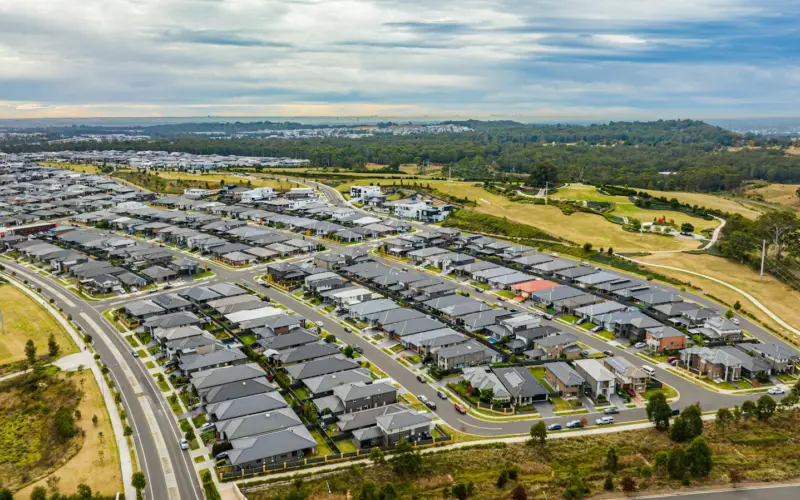
The search “land for sale in Panamá Norte” mixes two different markets. One is the private buyer looking for a small plot to build a house. The other is the developer or builder who needs larger lots with a defined land use to put up apartment buildings, shopping plazas or housing projects. This guide focuses on the second case.
Green Valley presents itself on its website as a development in Panamá Norte, an “área de expansión de la ciudad de Panamá” (expansion area of Panama City), covering 200 hectares, and its developers page says it offers lots for developers and builders, not for private buyers. The land uses it lists are RM3, RM2-C2, C1, C2 and SIU2. Radar covers what each code allows in a separate article.
The distinction matters because it changes what must be verified. A private buyer worries about the title and the price. A developer must also check what the zoning code allows, how the lot connects to the roads and which utilities reach the edge of the property, since the viability of the project depends on them.
Published access routes and travel times
The Green Valley location page describes how to reach the project. The table collects those details as the developer publishes them.
| Reference | Detail published by Green Valley |
|---|---|
| Corredor Norte, Las Lajas exit | Via the Club de Golf |
| Corredor Norte, Vía Panamá Norte exit | Direct exit to the project |
| Vía Panamá Norte | Direct access |
| Brisas del Golf road | Access via the Manolo Zárate road |
| Tocumen International Airport | 10 minutes |
| Banking district | 15 minutes |
| Casco Viejo | 18 minutes |
Data from the Green Valley location page. The times are the developer’s estimates; a developer can measure them at the hour and day when customers or workers will actually travel.
That information is a starting point for comparing other plots in the area. A lot with two Corredor Norte exits and a third road access has a different mobility logic from a property with a single entry track, and that difference weighs on construction logistics and on later sales.
Standalone plot or lot in a planned community
Buying an isolated plot and buying a lot inside a master-planned development carry different responsibilities. The table summarizes the points that usually separate the two.
| Aspect | Standalone plot | Lot in a planned community |
|---|---|---|
| Access roads | May need their own works | Part of the master plan |
| Utilities | Confirmed property by property | Reported by the developer per phase |
| Zoning code | Certified for that property | Reported by lot type |
| Surroundings | Depend on what is nearby | Follow a joint design |
| Title | Checked at the Public Registry | Checked the same way, property by property |
| Key decision | Feasibility of the works | Fit with the plan of the whole |
The last point deserves attention. Inside a planned community, the developer buys a plot and also a way of occupying space: heights, setbacks and uses already thought out for the whole. Green Valley’s note on macro-lots argues that working in an environment with planned infrastructure makes phased projects easier, and its note on multifamily land makes the same argument for apartment buildings. These are the developer’s positions, and each builder tests them against their own analysis.
How to evaluate a plot step by step
The list below orders the checks for a plot of land in Panama. The first two rest on public procedures and the rest are standard technical criteria.
- Identify the property record and its owner. The property number, volume and folio allow a search of the registry entry. Radar’s guide on searching the Public Registry online explains how to see the owner, liens and mortgages.
- Tell title from possessory rights. Buying titled land is not the same as buying land held by possession. The note on possessory rights versus property title summarizes the differences and how to verify them.
- Request the zoning code certification. Resolution 4-2009 of the Ministry of Housing, published in Gaceta Oficial 26221, regulates certifications of land use or zoning code. It requires a note with the property data, the lot, the surface area and the location, plus three copies of the location taken from the Zoning Graphic Document.
- Read the rules that come with the code. The MIVIOT regulations page gathers, among others, the resolutions on parking, front setbacks and the calculation of inhabitants per dwelling, which affect how many units fit on a lot.
- Confirm utilities up to the lot boundary. Water, electricity, telecommunications and sewage must arrive or be planned. At Green Valley, its smart city note mentions underground electricity, water and communications services.
- Measure access at the real hour. The developer’s times are checked with a test drive at peak hour.
- Have a lawyer review the contract. Payment terms, deeds, encumbrances and transfer conditions are negotiated in writing. Buyers abroad can also read the guide to buying property in Panama as a foreigner.
Common mistakes when buying land
Some errors repeat in purchases of land for development. One is accepting the zoning the seller mentions without asking for the certification. Another is measuring the distance to a landmark in kilometers instead of real travel minutes. A third is buying without checking whether the lot is subject to road easements or building lines, two items that Resolution 4-2009 itself treats as separate certifications. A fourth is approving the purchase before knowing whether the code supports the density and height the project needs.
It also helps to separate commercial information from technical information. A developer’s blog posts describe general advantages, while the data for a specific lot (surface area, code, setbacks) comes from the technical sheet and the official certification. For a wider view of the local property market, Radar’s reflection Who does Panama build for? offers context.
What Green Valley publishes
According to its website, Green Valley is a 200 hectare project in Panamá Norte with urbanized lots for developers and builders. Its urban design page cites 54 hectares of green areas split across eight parks, a lake, a four-lane main avenue 33 meters wide, and LED lighting that uses 50% less energy than sodium vapor lamps. The lot uses on its developers page range from apartment buildings and offices to shopping plazas, towers, hotels and institutional lots. Availability and the terms of each lot are checked directly with the sales team.
Green Valley publishes on its developers page the land uses of its lots, the minimum surface areas and the plans by phase. The current information for each lot is confirmed by its sales team.
Frequently asked questions
Where can developers buy land in Panamá Norte for a real estate project?
One option is an urbanized lot inside a planned community, like the ones Green Valley offers to developers according to its website; another is a standalone plot, which requires checking the property record, zoning and utilities separately.
How can someone find out what can be built on a plot in Panama?
A zoning code certification is requested from the Ministry of Housing and Territorial Planning, a procedure regulated by Resolution 4-2009, and the urban development rules for that code are read.
Does Green Valley sell lots to private buyers?
According to its developers page, lots are offered to developers and builders. Inquiries from other profiles go to its sales team.
Which documents should be reviewed when buying land?
The registry entry at the Public Registry, which shows the owner and liens, the land use certification, the contract and the plans or the lot’s surface area.
How long does it take to get from Panamá Norte to Tocumen airport?
Green Valley publishes 10 minutes from the project to Tocumen International Airport; it is the developer’s estimate and depends on traffic.
This content is informational and does not replace advice from a lawyer, an architect or a surveyor for a specific purchase.
Related articles
- How to search the Public Registry of Panama online
- Possessory rights versus property title in Panama
- Buying property in Panama as a foreigner
- Who does Panama build for?
Sources
- Green Valley, developers: land uses and lot characteristics.
- Green Valley, location: access routes and travel times.
- Green Valley, urban design: green areas, parks, main avenue and lighting.
- Green Valley, what is a smart city: underground services.
- Green Valley, macro-lots for developers and builders and land for multifamily projects.
- MIVIOT, Resolution 4-2009 (Gaceta Oficial 26221): procedure and requirements for land use certifications.
- MIVIOT, regulations: resolutions on parking, setbacks and inhabitants per dwelling.
- Radar Panamá, Public Registry and possessory rights.
Ask about this article
Type your question and we will show you the answer inside this article or in other Radar Panamá publications.