
Last verified: 4 November 2026. Every fact links to the article or source where it was read.
Contents of this guide
What Panamanians eat on Christmas Eve and Christmas Day
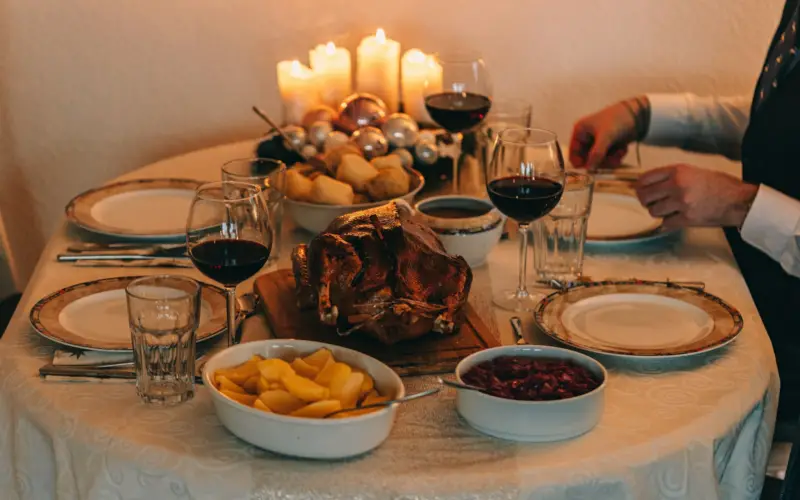
A Panamanian Christmas table carries tamales, rice with pigeon peas, roast turkey or ham, potato salad and ron ponche. Many families wait until midnight on 24 December to eat, according to Telemetro, and tamales are eaten all month. Chef Greta Mayorga, quoted by La Estrella de Panamá, sums up the menu as two proteins, rice with pigeon peas, a salad, tamales, a bread ring, a dessert and a drink for the toast.
The dinner sits alongside other customs that Radar covers in its guide to Christmas in Panama: parades, lights and events, and the dates when shops and offices close are in the December holidays guide.
| Dish or drink | What it is | What usually goes with it | Source |
|---|---|---|---|
| Tamales | Seasoned corn dough with chicken or pork, wrapped in a leaf and steamed | Eaten with family through December; part of the Christmas Eve dinner | Panamá América |
| Arroz con guandú | Rice with sautéed pigeon peas, an emblematic dish of the holidays | Turkey, pork leg or ham; by region, bacon, pork rinds or stewed hen | La Estrella de Panamá |
| Turkey | Roast bird; per Telemetro, the most expensive meat on the menu | Rice with pigeon peas and a red beet salad | Telemetro |
| Baked pork ham | The most commonly eaten option, per Telemetro | Pasta in white sauce, potatoes and salads | Telemetro |
| Pernil (pork leg) | Marinated, roasted pork, sometimes smoked | Rice with pigeon peas; on the morning of the 25th, in a bread ring sandwich | La Estrella de Panamá |
| Ron ponche | A drink of milk, egg and rum | Shared as a toast with the dinner dishes | Panamá América |
What a Panamanian tamal is and how it is made
A Panamanian tamal is seasoned corn dough filled with chicken or pork and wrapped in a bijao or plantain leaf, then steamed. According to Panamá América, the dough also takes olives, raisins, capers, green recao, onion and garlic. Panama uses leaves rather than corn husks, a detail La Estrella points out against other countries.
Each cook has her own rule. One of the cooks interviewed by Panamá América uses plantain leaf for the dough and bijao to complement it, and considers raisins indispensable; another holds that plantain leaf gives the characteristic flavor. Chef Mayorga recommends more meat than raisins and not too much sweetness. In another La Estrella piece, the pot tamal is made with corn dough, sofrito and pork ribs cooked for hours.
- Prepare the dough of corn with the sofrito.
- Cook the filling of chicken or pork with olives, raisins, capers and recao.
- Wrap in bijao or plantain leaf, following the house recipe.
- Steam until the dough is firm.
- Open the leaf and eat in company, as La Estrella describes.
The sources checked do not publish amounts or cooking times common to all families, so this guide does not fix them. La Estrella notes the tamal is found across the Americas; none of the open sources read documents when it reached the Panamanian December table.
Arroz con guandú: the dish nearly everyone mentions
Arroz con guandú is made with sautéed tender pigeon peas and rice, and La Estrella calls it an emblematic recipe of Panama, although it is also cooked across Central America and the Caribbean. It can be eaten alone or as a side. In some regions it comes with bacon, pork rinds, ham or stewed hen, and in Colón it takes ají chombo, garlic and coconut.
Pigeon peas are a seasonal legume. According to Ministry of Agricultural Development data quoted by TVN, Darién accounts for 35% of production, followed by Panamá Este with 20% and Veraguas with 19%, and the crop is harvested in the middle of the Christmas season. The varieties sold are black, pintón and green. Panamá América adds, based on the IMA catalog, that Panamanian varieties originate in Africa and India, and that demand rises at year end; details are in its piece on pigeon peas in the Panamanian market.
Turkey, ham and pork leg: the dinner’s meat
The centerpiece meat is usually turkey, pork ham or pernil, nearly always served with rice and pigeon peas and a salad. Telemetro describes roast turkey as the most expensive meat on the menu and ham as the most commonly eaten; pernil, for its part, appears in La Estrella’s pieces as the dish most tied to the arrival of Christmas.
One cook interviewed by La Estrella makes pernil Cuban style: she marinates it for two to three days with sour orange, garlic, oregano and salt, and sometimes smokes it. For ham, chef Mayorga suggests glazing it with a sweet sauce of fruit, jellies, juices, rum and cane honey and serving it in slices on a wide plate; she advises against store-bought glazes. The pieces also mention potato salad with shredded chicken, described as a family recipe eaten only in December, and the red beet salad.
Ron ponche, saril drink and bread ring: drinks and sweets
Ron ponche is the most representative drink of a Panamanian Christmas, according to La Estrella, which places it among those inherited from the traditions of enslaved Africans. It is made with milk and egg yolk; Panamá América records a home recipe with condensed milk, evaporated milk and yolks cooked in a bain-marie for about 40 minutes, and it is sold in supermarkets, shops and liquor stores.
Chicha de saril is prepared from December, when fresh sorrel flower is found, with ginger, cinnamon and cloves, and La Estrella describes it as an Afro-Caribbean legacy. The egg-bread ring, crown-shaped with walnuts and almonds, is the table’s bread; according to historians cited in that piece, the tradition goes back to Spanish rule and relates to Spain’s sweet roscón. It is eaten with hot chocolate. For dessert, chef Mayorga mentions flan or fruit preserve with nuts, and another piece adds rum preserve with raisins and fresh corn dumplings.
New dishes and tradition: what stays
The Panamanian table adds dishes from other countries without dropping its own. La Estrella lists turkey, ham bread and hallacas among the dishes that have become common in December, along with Italian panettone. The same piece warns that the risk is not in adding dishes but in forgetting the traditional ones: arroz con guandú no longer being the center and tamales showing up only out of obligation.
The month’s expenses, such as the thirteenth month, are explained in the guide to aguinaldo in Panama, and for retirees and pensioners there is the Christmas bonus guide. Plans for the night of the 31st are in New Year’s Eve in Panama.
Myths and facts
- Myth: Panamanian tamales are wrapped in corn husk. Fact: they are wrapped in bijao or plantain leaf, per Panamá América and La Estrella.
- Myth: arroz con guandú is exclusively Panamanian. Fact: it is also cooked in Central America and the Caribbean, and La Estrella considers it emblematic of Panama.
- Myth: turkey is the most common main dish. Fact: Telemetro says baked pork ham is the most commonly eaten option; turkey is the most expensive meat.
- Myth: ron ponche is drunk only at Christmas. Fact: Panamá América says it is consumed at any time of year, although it shows up more at the December table.
- Myth: there is a single tamal recipe. Fact: the recipe varies by family and by the leaf used.
Dates for parades, light-ups and events of the Christmas season in the city.
Frequently asked questions
What do Panamanians eat on Christmas Eve?
They eat roast turkey or ham, arroz con guandú, potato or beet salad, tamales, a bread ring and ron ponche. Many families dine close to midnight, according to Telemetro, and the exact version changes from house to house.
What goes into a Panamanian tamal?
It has corn dough with chicken or pork, olives, raisins, capers, green recao, onion and garlic, wrapped in bijao or plantain leaf and steamed, according to Panamá América. Amounts depend on each family recipe.
What is arroz con guandú?
It is rice cooked with tender sautéed pigeon peas, a dish La Estrella calls emblematic of Panama. By region it is served with bacon, pork rinds, ham or stewed hen, and in Colón with ají chombo, garlic and coconut.
What is ron ponche and where does it come from?
It is a drink of milk, egg yolk and rum, the most representative of a Panamanian Christmas per La Estrella. That piece places it among those inherited from the traditions of enslaved Africans; the open sources read do not say when it appeared in Panama.
What is eaten for breakfast on 25 December in Panama?
A turkey or pernil sandwich in a bread ring is the typical Christmas Day breakfast, according to La Estrella. The egg-bread ring is also eaten with hot chocolate.
Related articles
- Christmas in Panama: parades, lights and events with dates
- New Year’s Eve in Panama: plans, events and what is open
- December holidays in Panama: dates, long weekends and what closes
- Aguinaldo in Panama: the thirteenth month payment
- Christmas bonus for retirees and pensioners in Panama
Sources
Checked on 4 November 2026. The sources are in Spanish.
- Telemetro, Nochebuena en Panamá: tradiciones y comidas (22 December 2023).
- La Estrella de Panamá, La mesa navideña, una tradición que destaca nuestra cocina (24 December 2020).
- La Estrella de Panamá, ¿A qué sabe la Navidad en Panamá? (19 December 2024).
- La Estrella de Panamá, Platillos panameños que no pueden faltar en esta época navideña (12 December 2024).
- La Estrella de Panamá, ¿Se está perdiendo el sabor panameño en la Navidad? (23 December 2025).
- Panamá América, Hojas de bijao o de plátano: ¿dónde está la sazón de los tamales? (25 December 2024).
- Panamá América, Ron ponche, invitado especial en Navidad (16 December 2020).
- Panamá América, Guandú: variedades y comportamiento en el mercado panameño (19 October 2022).
- TVN, La ruta del guandú: tradición, trabajo y sabor (18 December 2025).
Ask about this article
Type your question and we will show you the answer inside this article or in other Radar Panamá publications.