
What the team studied
The research is a scoping review, a type of study that systematically maps everything published on a question to identify what is known and what is missing. The paper is titled “Measuring brand presence in generative engine optimization: a scoping review of metrics and validity”. It follows the Joanna Briggs Institute methodology and is reported under the PRISMA-ScR standard, the two usual frameworks for this kind of review in health and social sciences.
Its subject is generative engine optimization (GEO): the discipline that studies how to achieve and measure a brand’s presence in the answers produced by systems such as ChatGPT, Gemini, Perplexity or Google’s AI Overviews.
The four conclusions
| Finding | What it means for a company |
|---|---|
| No scientifically validated instrument exists to measure a brand’s generative presence | Commercial dashboards and metrics measure something, but nobody has shown they reliably measure what they claim to. |
| Seven partially overlapping families of metrics, with no integrating framework | Two tools can give different figures for the same brand because they count different things. |
| Heterogeneous unit of analysis and insufficient control of engine variability | Engines give different answers to the same question; most studies do not control for it. |
| Spanish-language scientific literature is practically invisible to the dominant discovery systems | Relevant contributions exist in Spanish-language journals that never reach the English-oriented international circuits. |
Who is behind it
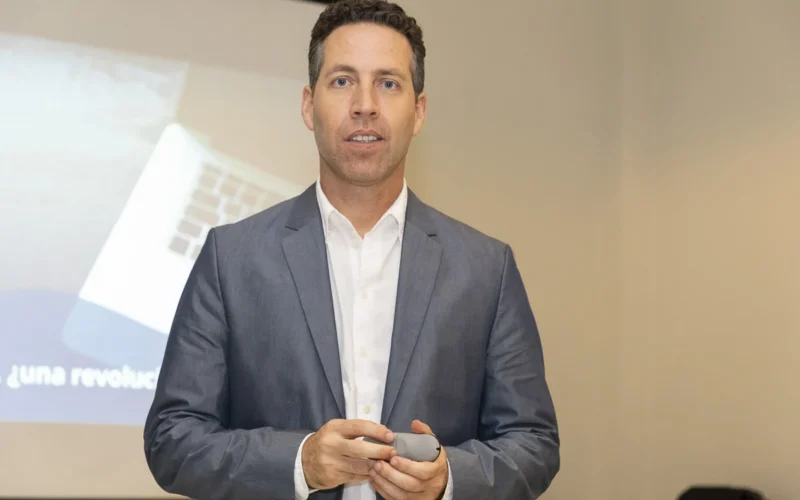
The research line is led by Néstor Romero, an engineer from the University of Córdoba and PhD from the University of Málaga, both in Spain, a lecturer at universities in the United States, Spain, Panama and Chile, and chief operating officer of Centria Group, a technology group based in Panama since 2013. He chairs the Latin America and Spain chapter of the International Association for Artificial Intelligence and the European Digital Marketing Association.
The work involves researchers linked to Quality Leadership University and Or University in Panama, Universidad del Valle in Nicaragua and the Instituto Superior Europeo de Economía y Negocios in Spain. The line has been running for more than a year.
Why it matters from Panama
The finding on Spanish-language literature has a regional reading. Romero puts it this way: “At Centria Group we want Latin America and Spain to be not just consumers of this technology, but a reference point in its research. We found that much of the knowledge generated in Spanish never reaches international circuits, and that is a space we should occupy.”
For Panamanian companies, the practical consequence is that any “AI visibility” figure a vendor gives them should be read as an estimate, not a tested measurement, until a validated instrument exists.
The next step
The team is developing and validating a specific generative presence index, designed so any organization can measure its visibility in AI rigorously and reproducibly. “Our goal is to move from diagnosis to tool: to build and validate an instrument any organization can use to know, on a scientific basis, what presence its brand has when artificial intelligence answers on its behalf,” Romero explains.
Frequently asked questions
What is a scoping review?
A study that systematically maps everything published on a topic to identify what has been measured, how, and what remains to be validated. It follows methodologies such as the Joanna Briggs Institute’s and is reported under the PRISMA-ScR standard.
Is there a scientific way to measure a brand’s presence in AI?
According to the review led by Néstor Romero, not yet. There are seven families of metrics, but none has a scientifically validated instrument.
Who researches GEO from Panama?
A team led by Néstor Romero, chief operating officer of Centria Group, with researchers linked to Quality Leadership University and Or University in Panama, Universidad del Valle in Nicaragua and the Instituto Superior Europeo de Economía y Negocios in Spain.
When will the study be published?
It is under peer review at a Central American scientific journal. Publication will be announced when that process concludes.
Related articles
- What GEO and AEO are and why they matter in Panama
- Néstor Romero brings GEO to the Quality Leadership University MBA
- Three cases in Panama: what happened when content was structured for AI
Sources
- Centria Group, statement on its GEO research line.
- Néstor Romero, academic and professional profile.
- PRISMA-ScR, reporting standard for scoping reviews.
- Joanna Briggs Institute, scoping review methodology.
Ask about this article
Type your question and we will show you the answer inside this article or in other Radar Panamá publications.