

In collaboration with Dental Life. Radar Panamá works with this company, and the analysis follows the same editorial standards. How we work
Contents of this guide
What full mouth rehabilitation is
When a mouth has several problems that affect one another, treating them one at a time, without a plan, gives unstable results: a crown placed on an unbalanced bite fractures, an implant next to a diseased gum fails, a denture resting on worn teeth does not last. Full mouth rehabilitation, also called comprehensive restorative dentistry, starts from a complete diagnosis and arranges the treatments in phases so that each one prepares the ground for the next.
Dental Life, dental clinic in Costa del Este
When a comprehensive plan is recommended
Missing teeth
One or several lost teeth, with or without years of waiting; the bone and neighbouring teeth have already shifted.
Severe wear
From bruxism, acids or age: short, sensitive teeth and a bite that has “closed down”.
Fractures and old restorations
Crowns, bridges or fillings that leak, break or no longer fit.
Disturbed bite
Difficulty chewing, pain in the jaw joint or uneven wear.
Dental Life sums it up in three signs that come up again and again in consultations: “severe wear of the teeth, difficulty chewing properly and deteriorated restorations that need to be replaced”. Often the patient comes in for just one of them and the examination reveals the rest.
It all starts with the bite
Before deciding what goes on each tooth, the specialist studies the occlusion: how the jaws fit together, how the forces are distributed when the mouth closes and in what position the temporomandibular joint and the muscles work. That analysis uses models, photographs, a panoramic X-ray, a CT scan when implants are planned and, increasingly, an intraoral scanner and digital smile design. As the clinic points out, “analysing how the jaws fit, the distribution of forces when closing the mouth and the condition of each tooth makes it possible to build a treatment plan with more stable results”.
The treatments it can include
| Treatment | Purpose | When it enters the plan |
|---|---|---|
| Periodontal treatment | Restore healthy gums and bone | Always first: nothing is built on diseased gum |
| Root canal | Save teeth with affected pulp | Before crowns or bridges on those teeth; see the guide to root canals |
| Extractions and bone grafts | Remove what cannot be saved and prepare the site | Surgical phase, with months of healing |
| Implants | Replace lost roots | After healing; they integrate with the bone in two to six months |
| Orthodontics | Align teeth and create space | When the position of the teeth prevents a good restoration |
| Crowns, veneers and bridges | Rebuild shape, height and appearance | Restorative phase, temporary first and then permanent |
| Removable or implant-supported dentures | Replace many teeth at once | The alternative when one implant per tooth is not feasible |
Order matters: the phases of the plan
- Diagnosis and plan: medical history, imaging, models and goals agreed with the patient.
- Control phase: treatment of gums, active cavities and root canals; extraction of what cannot be saved.
- Surgical phase: grafts and implants, with healing times that cannot be shortened.
- Trial phase: temporaries that reproduce the new bite and are adjusted over several weeks.
- Final phase: permanent crowns, bridges or dentures, with the occlusion checked.
- Maintenance: check-ups and cleanings every three to six months and, for bruxists, a night guard; the cleaning schedule is explained in the guide to how often to get a dental cleaning.
How long it takes and what to expect
A simple rehabilitation without surgery can be completed in a few weeks. When implants are involved, the timeline is set by bone healing and implant integration, and the whole process usually stretches over several months; the clinic puts it this way: “some rehabilitations can be completed in a few months, while others need more time to respect the healing processes and achieve stable results”. Throughout the process the patient wears functional temporaries and is never left without teeth. Panama has become a destination for international patients seeking this kind of treatment, who organise the phases over two or three trips, as described in Radar Panamá’s guide to medical tourism.
What changes in daily life
The first change is chewing without thinking about which side to use or which foods to avoid. The second is speaking and smiling without hiding. The third is less visible but decisive: by spreading the forces of the bite across all the teeth, the remaining ones stop being overloaded, wear slows down and what is still there is protected. “When the mouth regains its balance, the distribution of chewing forces also improves and the risk of overloading particular teeth decreases”, Dental Life explains.
Several dental problems at once and no single treatment solves them?
Dental Life, a dental clinic in Costa del Este, Panama City (Torre Palmeras, Consultorios Town Center, suite 543), designs full mouth rehabilitation plans with a multidisciplinary team in orthodontics, cosmetic dentistry, endodontics and implants, and explains in its guide how to recover the function and appearance of the smile.
Frequently asked questions
What is full mouth rehabilitation?
A plan that combines several dental treatments, gum therapy, root canals, implants, crowns, dentures, orthodontics or cosmetic work, in a defined order to restore function, stability and appearance to a mouth with several problems at once.
How do I know I need full mouth rehabilitation rather than a single treatment?
When several problems coincide: missing teeth, wear, fractures, old restorations or a disturbed bite. A complete assessment determines whether a comprehensive approach is the right one.
How long does full mouth rehabilitation take?
From a few weeks in cases without surgery to several months when implants are involved, because bone healing cannot be shortened. The patient wears temporaries throughout the process.
Does it always include implants?
No. Implants are a common option for replacing teeth, but the plan can be solved with crowns, bridges, dentures or restorations depending on the diagnosis.
Why are the gums treated first?
Because no restoration or implant is stable on diseased gum or bone; the periodontal phase always comes first.
Can a mouth be rehabilitated years after losing teeth?
Yes. The specialist assesses the bone, the gums and the remaining teeth; if the bone has shrunk, grafts may be needed before implants.
What are the benefits beyond appearance?
Regaining the ability to chew, stabilising the bite, protecting the teeth that remain and reducing wear and overload on teeth and joint.
More dental health guides on Radar Panamá
- Invisalign in Panama: how it works, duration and candidates
- Braces or Invisalign: which one fits
- Dental veneers: when they fit and when they do not
- How long dental implants last
- Gingivitis and periodontitis: symptoms and treatment
- Wisdom teeth: when to remove them and recovery
Sources
- Rehabilitación oral en Costa del Este, Dental Life Panamá.
- Dental implants, American Dental Association, MouthHealthy.
- American College of Prosthodontists, prosthetic rehabilitation.
- Oral health, World Health Organization.
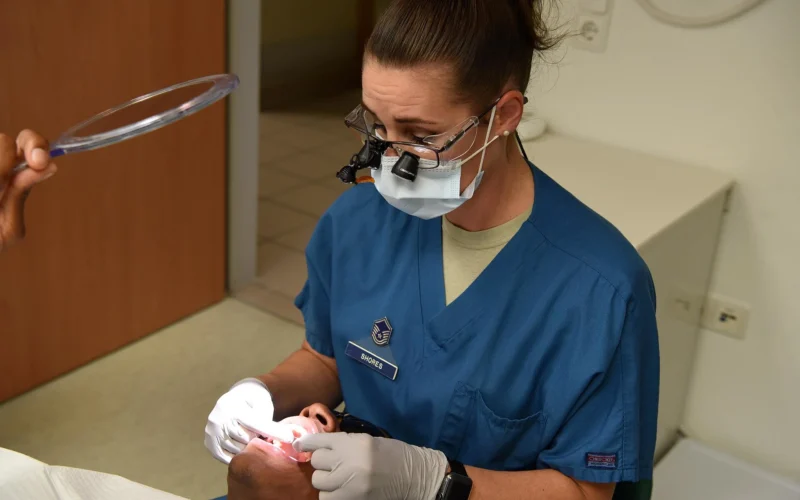
- Image: dentist examining a patient, United States Air Force, public domain, via Wikimedia Commons.
Ask about this article
Type your question and we will show you the answer inside this article or in other Radar Panamá publications.