

In collaboration with Dental Life. Radar Panamá works with this company, and the analysis follows the same editorial standards. How we work
Contents of this guide
What happens inside the tooth
Beneath the enamel and the dentin lies the pulp, the soft tissue of nerves and blood vessels that keeps the tooth alive. When decay advances untreated, when the tooth fractures or takes a hit, bacteria reach the pulp and cause an inflammation, pulpitis, which can turn into an infection and spread to the bone around the root. At that point a conventional filling no longer solves the problem: the damaged tissue inside the tooth has to be removed.
Dental Life, dental clinic in Costa del Este
Enamel
The outer layer, the hardest substance in the body; once it breaks, decay moves inward.
Dentin
The middle tissue that transmits sensitivity; when exposed it causes pain with cold and sweets.
Pulp
Nerves and vessels at the centre of the tooth and inside the root canals; this is what a root canal treats.
Apex
The tip of the root, through which infection can pass into the bone and form an abscess.
Symptoms that point to a root canal
- Persistent toothache, or pain that wakes the patient at night.
- Lingering sensitivity to hot or cold that continues after the stimulus is gone.
- Pain when chewing or pressing on the tooth.
- A swollen, reddened gum, or a small pimple that drains (a fistula).
- Darkening of the tooth after a blow.
- An abscess or facial swelling.
Why saving the natural tooth usually beats extracting it
No implant or bridge fully reproduces a natural tooth: the ligament that binds it to the bone cushions the bite, keeps the bone stimulated and stops neighbouring teeth from drifting. Extracting a tooth that could have been saved sets off a chain of problems, migration of adjacent teeth, uneven wear, bone loss, and forces more complex restorative work later. The American Association of Endodontists notes that a tooth treated with a root canal and properly restored can last a lifetime. Even so, every case is assessed on its own: if the root has a vertical fracture or the tooth lacks enough structure to be restored, extraction and an implant may be the better option, a scenario Radar Panamá covers in its guide to full mouth rehabilitation.
What the procedure is like today
- Diagnosis through examination, pulp vitality tests and digital X-rays or cone-beam CT when the anatomy calls for it.
- Local anaesthesia and isolation of the tooth with a rubber dam so the work is done free of saliva and bacteria.
- Opening and cleaning of the canals with rotary nickel-titanium instruments and disinfecting irrigation.
- Sealing of the canals with gutta-percha and cement, checked with an X-ray.
- Restoration of the tooth with a filling or, on molars and premolars, a crown that protects it from fracture.
A modern root canal is usually completed in one or two visits and, with proper anaesthesia, hurts no more than a filling. Any discomfort afterwards is mild and is managed with ordinary painkillers for two or three days. Dental Life explains that at its clinic “we use advanced diagnostic tools to plan each procedure with precision”, a standard that is now common among the Panama City clinics that also treat international patients, as described in Radar Panamá’s guide to medical tourism in Panama.
Care after a root canal
| When | What to do | What to avoid |
|---|---|---|
| First 24 hours | Take the prescribed painkiller, chew on the other side, brush gently | Chewing hard food on the tooth, smoking |
| First weeks | Complete the permanent restoration or crown on the scheduled date | Leaving the tooth with a temporary filling for months |
| Long term | Brush twice a day, floss, attend regular check-ups with a control X-ray | Ignoring new pain or swelling in the area |
Why waiting is a bad idea
A tooth with pulpitis treated in time is almost always saved; the same tooth with an abscess that is months old may have lost bone, developed cracks or need apical surgery. An untreated dental infection can also spread to the tissues of the face and neck. The practical rule is simple: a toothache that lasts more than a day or two, or any swelling, justifies an evaluation within the week.
Persistent pain or sensitivity that will not go away?
Dental Life, a dental clinic in Costa del Este, Panama City (Torre Palmeras, Consultorios Town Center, suite 543), has specialists in endodontics, orthodontics, cosmetic dentistry and full mouth rehabilitation, and explains in its guide what a root canal is and when it is needed to save a tooth.
Frequently asked questions
What is a root canal?
The treatment that removes inflamed or infected dental pulp, cleans and disinfects the canals inside the root and seals them so the tooth can be kept instead of extracted.
When is a root canal needed?
When deep decay, a fracture or trauma affects the pulp: persistent pain, lingering sensitivity to hot or cold, pain when chewing, a swollen gum or an abscess.
Does a root canal hurt?
With local anaesthesia, no more than a filling. There may be mild discomfort for two or three days afterwards, manageable with ordinary painkillers.
Does a root canal avoid a dental implant?
In many cases, yes: if the tooth can be recovered, the natural tooth is kept and extraction and an implant are avoided.
How long does a root-canal-treated tooth last?
Properly restored, especially with a crown on molars, it can last a lifetime; the success rate is above 90%, according to the American Association of Endodontists.
Can a crowned tooth need a root canal?
Yes. The pulp under a crown can become inflamed or infected; the specialist assesses whether the root canal can be done through the crown or whether the crown must be replaced.
What if the treated tooth hurts again years later?
There may be a new infection or a crack. A check-up with an X-ray allows a decision between retreatment, apical surgery or extraction.
Can a root canal be done on molars?
Yes, on front and back teeth alike. Molars have more numerous and curved canals, so they usually take longer and call for a specialist.
More dental health guides on Radar Panamá
- Invisalign in Panama: how it works, duration and candidates
- Braces or Invisalign: which one fits
- Dental veneers: when they fit and when they do not
- How long dental implants last
- Gingivitis and periodontitis: symptoms and treatment
- Wisdom teeth: when to remove them and recovery
Sources
- ¿Qué es una endodoncia y cuándo se necesita?, Dental Life Panamá.
- Root Canal Treatment, American Association of Endodontists.
- Root Canals, American Dental Association, MouthHealthy.
- Oral health, World Health Organization.
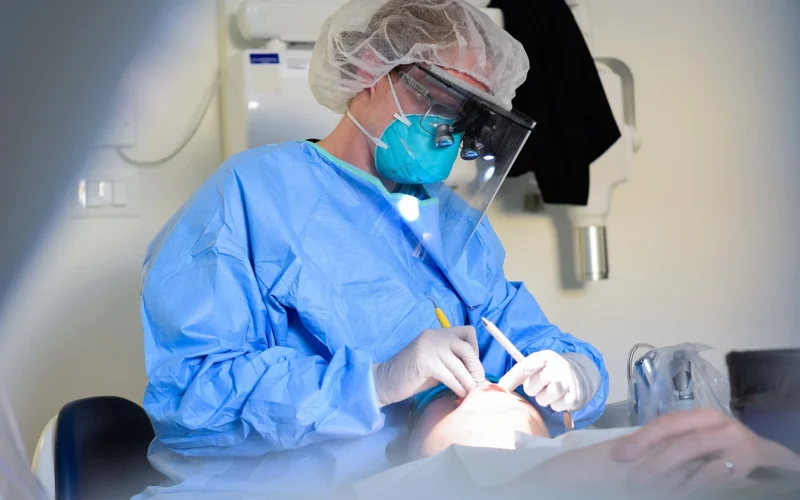
- Image: dentist during a treatment, United States Air Force, public domain, via Wikimedia Commons.
Ask about this article
Type your question and we will show you the answer inside this article or in other Radar Panamá publications.